The Unique Landscape of Direct Lever Espresso Machines
In the world of manual lever espresso machines, direct lever systems stand apart, offering an unparalleled degree of control over the brewing process. Unlike their pump-driven or spring-assisted counterparts, direct levers put the barista in direct command of the pressure applied to the coffee puck. This intimate connection between user input and extraction dynamics is what makes these machines a favorite among enthusiasts seeking ultimate customization and a truly hands-on experience. Understanding the mechanics of how this manual force translates into a precisely controlled pressure profile is fundamental to unlocking the full potential of your espresso, allowing for a depth of flavor exploration unmatched by other brewing methods.
Defining Direct Lever Mechanics vs. Spring Levers
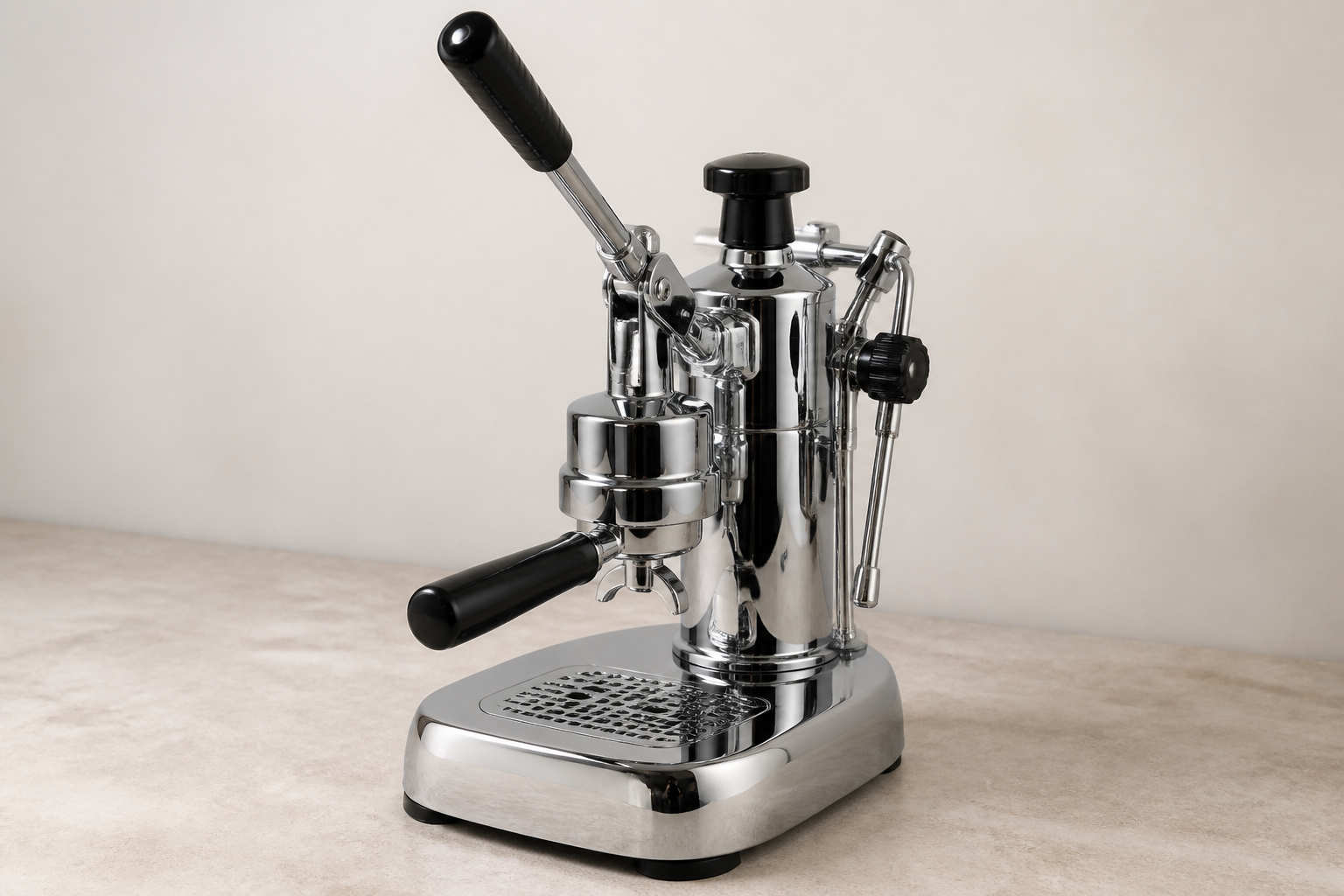
The distinction between direct lever and spring lever machines is critical to grasping pressure profiling. Spring lever machines, while still manual in operation, utilize a powerful spring mechanism that, once tensioned, provides a pre-determined, declining pressure profile during extraction. The barista lifts the lever to compress the spring, and then releases it, allowing the spring to push water through the puck. While this offers consistency and a classic declining pressure curve, it limits real-time pressure adjustments during the shot. Direct lever machines, conversely, such as direct lever machines like the Flair 58 or La Pavoni Europiccola, feature a piston directly connected to the lever arm. The barista applies continuous, variable force to this lever, directly controlling the piston's movement and, consequently, the water pressure on the coffee puck. There's no spring to dictate the pressure; it's entirely up to the operator's strength, sensitivity, and skill. This fundamental difference is why direct levers are the ultimate tool for true pressure profiling.
This direct mechanical linkage means that every nuance of force applied by the barista translates immediately to the brew chamber. A slight increase in downward pressure on the lever means a corresponding increase in extraction pressure, while easing off the lever reduces it. This real-time, analog feedback loop is what grants direct lever users such profound influence over the extraction kinetics, making them distinct from almost any other type of espresso machine. The tactile feedback, the subtle resistance felt through the lever, becomes an extension of the barista's senses, allowing for instantaneous micro-adjustments that shape the shot in ways automated systems can only attempt to mimic.
The Core Principle of Manual Pressure Application
At its heart, a direct lever espresso machine operates on a simple principle: leverage. The barista's hand force, applied to the end of a lever arm, is amplified and translated into hydraulic pressure within the brew chamber. The lever extends from a fulcrum point, connecting to a piston that moves within a cylinder, forcing hot water through the compacted coffee grounds. The longer the lever arm and the greater the force applied, the higher the pressure exerted on the water. This direct, unassisted manual application of force demands a tactile understanding and a developed sense of feel from the barista. It's a dance between human strength, puck resistance, and desired flow, where subtle shifts in hand pressure can dramatically alter the shot's trajectory. This constant feedback, often felt through the lever itself, is a defining characteristic and a key advantage for pressure profiling. Unlike pump-driven machines that rely on electrical motors and solenoids, the direct lever system offers a direct, intuitive, and mechanically transparent connection to the extraction process, making the barista an integral part of the machine's operation.
Deconstructing Pressure Profiling: Beyond 9 Bars
For decades, the standard for espresso extraction has been a constant 9 bars of pressure, a benchmark established by commercial pump machines. While this remains a reliable starting point and yields excellent results for many coffees, modern espresso theory, particularly among enthusiasts of direct lever machines, recognizes the immense potential in varying pressure throughout the extraction. This technique, known as pressure profiling, is not merely about hitting a specific number, but about sculpting the pressure curve to coax specific flavors and textures from the coffee. It's about moving beyond a static recipe to a dynamic interaction with the bean.
What is Pressure Profiling in Espresso?
Pressure profiling is the deliberate manipulation of hydraulic pressure applied to the coffee puck during different phases of the espresso extraction. Instead of a flat, constant pressure, a profile might involve a low-pressure pre-infusion, a gradual ramp-up to peak pressure, a sustained period, and then a controlled decline. This dynamic approach allows the barista to influence the solubility of different compounds within the coffee, manage flow rates, and mitigate common extraction flaws like channeling. The goal is to optimize the extraction yield and balance the sensory attributes of the final shot, moving beyond a one-size-fits-all approach to espresso. By controlling the pressure curve, you can selectively extract desired compounds while minimizing the extraction of undesirable ones, thereby enhancing sweetness, body, acidity, or reducing bitterness and astringency.
Why Direct Lever Machines Excel at Pressure Control
Direct lever machines are inherently designed for pressure profiling. Their mechanical simplicity and direct user interface provide an unparalleled level of immediate, intuitive control. There are no electronic valves, pumps, or pre-set programs to contend with; it's just the barista, the lever, and the coffee. This direct connection means that any desired pressure curve can be attempted, from subtle adjustments to dramatic shifts, limited only by the barista's skill and the machine's capabilities. The tactile feedback through the lever – the resistance felt as water pushes through the puck – becomes a crucial guide, allowing for real-time adjustments that automated systems simply cannot replicate. This makes them ideal for exploring the complex interplay between pressure, flow, and flavor, offering a level of nuance that empowers the user to truly 'dial in' a coffee to its absolute best potential.
The Sensory Impact of Variable Pressure on Extraction
The pressure profile directly influences the types and concentrations of compounds extracted from the coffee grounds, fundamentally altering the sensory attributes of the final espresso. Here’s a breakdown of how different pressure strategies can impact flavor:
- Low-Pressure Pre-Infusion (1-3 bar): Promotes even saturation of the puck, reducing channeling. This can lead to increased sweetness and body, as more soluble compounds are extracted uniformly. It often tames harsh acidity and bitterness by ensuring a more gentle initial phase of extraction, allowing the coffee to bloom and prepare for the main extraction without aggressive compound stripping.
- Moderate Peak Pressure (6-7 bar): Can highlight acidity and clarity, particularly in lighter roasted, high-quality beans. It tends to produce a less viscous shot than higher pressures but can reveal more nuanced floral or fruity notes, often resulting in a brighter, cleaner cup. This pressure range is often favored for modern espresso styles that prioritize delicate flavors over intense body.
- High Peak Pressure (8-9 bar): Favors body and crema development. It extracts more dissolved solids, often resulting in a richer, more intense, and sometimes bolder flavor profile. This is the traditional Italian espresso pressure, yielding a viscous, powerful shot. However, if not managed carefully, especially with a too-fine grind or dark roast, it can also lead to over-extraction and excessive bitterness or astringency.
- Declining Pressure Profile: Mimics the natural decay of pressure in a spring lever or traditional commercial machine. A controlled decline towards the end of the shot helps to mitigate over-extraction of bitter and astringent compounds that are typically extracted later in the process. This leads to a sweeter, cleaner finish and a more balanced cup, smoothing out any harsh notes that might develop at constant high pressure and ensuring a pleasant aftertaste.
By understanding these relationships, a barista can tailor a pressure profile to complement the specific characteristics of a coffee bean, whether it's a bright Ethiopian natural or a robust Sumatran dark roast. This granular control allows for a level of customization that truly elevates the espresso experience from merely good to exceptional.
The Mechanics of Direct Lever Pressure Generation
To truly master pressure profiling on a direct lever machine, it's essential to understand the underlying mechanical principles that translate your manual effort into hydraulic force. This involves dissecting the components and their interactions within the grouphead, understanding the elegant simplicity that underpins this complex process.
The Lever Arm and Piston Assembly: A Force-Pressure Translation
The core of a direct lever machine's pressure generation lies in its lever arm and piston assembly. The lever acts as a simple machine, typically a first-class lever in most designs, where the fulcrum is positioned between the effort (your hand) and the load (the piston rod). When you press down on the lever, this force is transferred to a piston moving within a cylindrical brew chamber. The key relationship here is fundamental physics: the force you apply to the lever creates a downward force on the piston. This piston force, divided by the piston's cross-sectional area, determines the hydraulic pressure exerted on the water in the brew chamber. For instance, a larger piston diameter will require more total force from the barista to achieve the same pressure compared to a smaller piston, as the force is distributed over a greater area. This explains why some machines feel 'heavier' or 'lighter' to pull, even when targeting the same bar pressure.
The resistance encountered by the piston is primarily from the compacted coffee puck. If the grind size is too fine or the dose too high, the puck resistance increases, requiring more force on the lever to achieve a desired pressure, or restricting flow significantly. Conversely, a coarse grind offers less resistance, making it harder to build and sustain high pressure, often leading to rapid flow and under-extraction. The tactile feedback through the lever directly communicates this puck resistance to the barista, allowing for intuitive, real-time adjustments to maintain the desired pressure and flow rate. This continuous feedback loop between the barista's applied force and the puck's resistance is what defines the manual control of a direct lever.
Water Path and Grouphead Dynamics in Direct Lever Systems
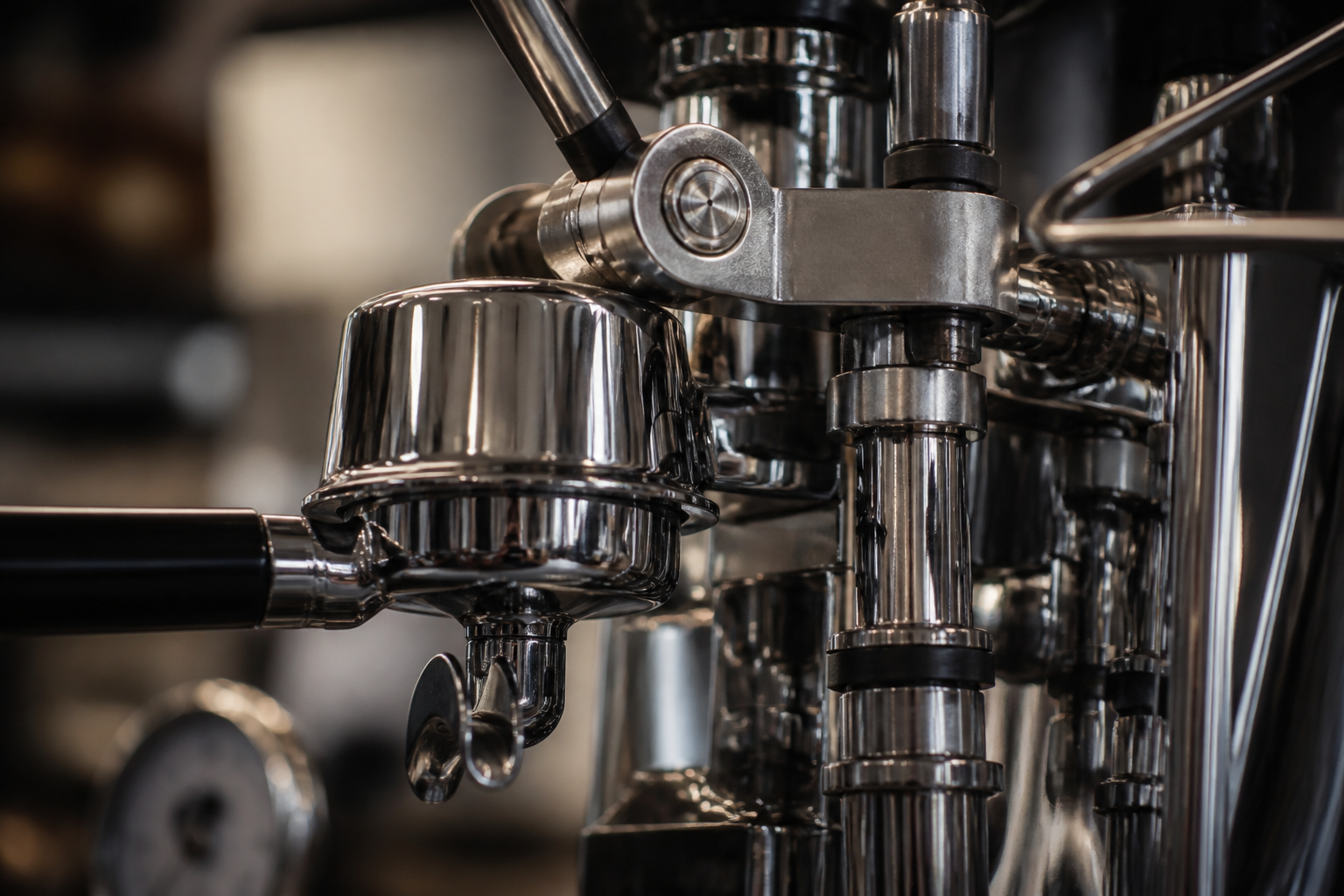
The water path in a direct lever machine is typically straightforward, contributing to its reliability and responsiveness. Hot water, usually from a boiler or a thermosiphon system, fills the brew chamber above the piston. As the lever is actuated downwards, the piston descends, displacing this water. The water is then forced through a shower screen and into the coffee puck. The design of the grouphead, including its internal channels and the shower screen, plays a crucial role in how uniformly this pressure is distributed across the puck's surface. A well-designed grouphead ensures even water dispersion, which is crucial for preventing channeling – a common failure mode where water finds paths of least resistance through the puck, leading to uneven extraction and a poor-tasting shot. An even distribution ensures that all coffee grounds are equally exposed to the pressurized water, maximizing extraction efficiency and flavor balance.
Some direct lever designs incorporate a pre-infusion chamber or a system where the piston slightly retracts to allow initial puck saturation before full pressure is applied. This initial, low-pressure phase is critical for preparing the puck for the main extraction, swelling the grounds and filling any voids, thereby promoting a more even and effective extraction once higher pressures are introduced. The directness of the water path also means there's minimal opportunity for pressure loss or temperature fluctuations between the boiler and the brew chamber, assuming proper thermal management of the grouphead. This streamlined design minimizes variables, allowing the barista to focus purely on pressure control and puck interaction.
Understanding the Role of the Brew Chamber Volume
The volume of the brew chamber, specifically the space above the piston where water is held before extraction, dictates the maximum shot volume achievable in a single pull. Most direct lever machines have a fixed brew chamber volume (e.g., 40-60ml for a single shot). This means that for a given dose, the brew ratio (the ratio of coffee grounds to extracted espresso liquid) is largely determined by how much of that water volume is pushed through the puck. If you aim for a longer shot (higher brew ratio), you might need to perform a 'Fellini move' – partially lifting the lever mid-shot to refill the brew chamber – or ensure your machine has sufficient capacity for your desired output. This technique, while effective, introduces another variable to manage.
The brew chamber volume also influences the feel of the pull. A larger volume, requiring more water to be displaced, might feel different in terms of lever travel and resistance compared to a smaller volume, even at the same pressure. Consistency in dosing and grind becomes even more critical when working with a fixed brew chamber volume, as it directly impacts how much water can flow through the puck at your desired pressure before the piston reaches the bottom of its travel. Understanding this constraint helps you plan your desired brew ratio and adjust your grind and dose accordingly, ensuring you don't run out of water mid-shot or end up with an excessively short pull.
Stages of Direct Lever Pressure Profiling
Effective pressure profiling isn't a single action but a sequence of deliberate phases, each designed to optimize a specific aspect of the extraction. Understanding and mastering these stages is key to crafting exceptional espresso on a direct lever machine, allowing for a methodical approach to flavor development.
Pre-Infusion: Controlled Saturation for Even Extraction
Pre-infusion is perhaps the most critical initial phase of pressure profiling, especially in direct lever extraction. It involves introducing water to the coffee puck at a low pressure (typically 1-3 bars) before the main high-pressure extraction begins. The primary goal is to evenly saturate the coffee grounds, allowing them to swell and settle uniformly. This process minimizes the likelihood of channeling, where water bypasses significant portions of the coffee bed, leading to uneven and under-extracted espresso. The pre-infusion duration is a crucial variable to experiment with, as it significantly impacts the subsequent extraction and the final flavor profile. A gentle, thorough pre-infusion sets the stage for a balanced and comprehensive extraction.
Low-Pressure Pre-Infusion Techniques
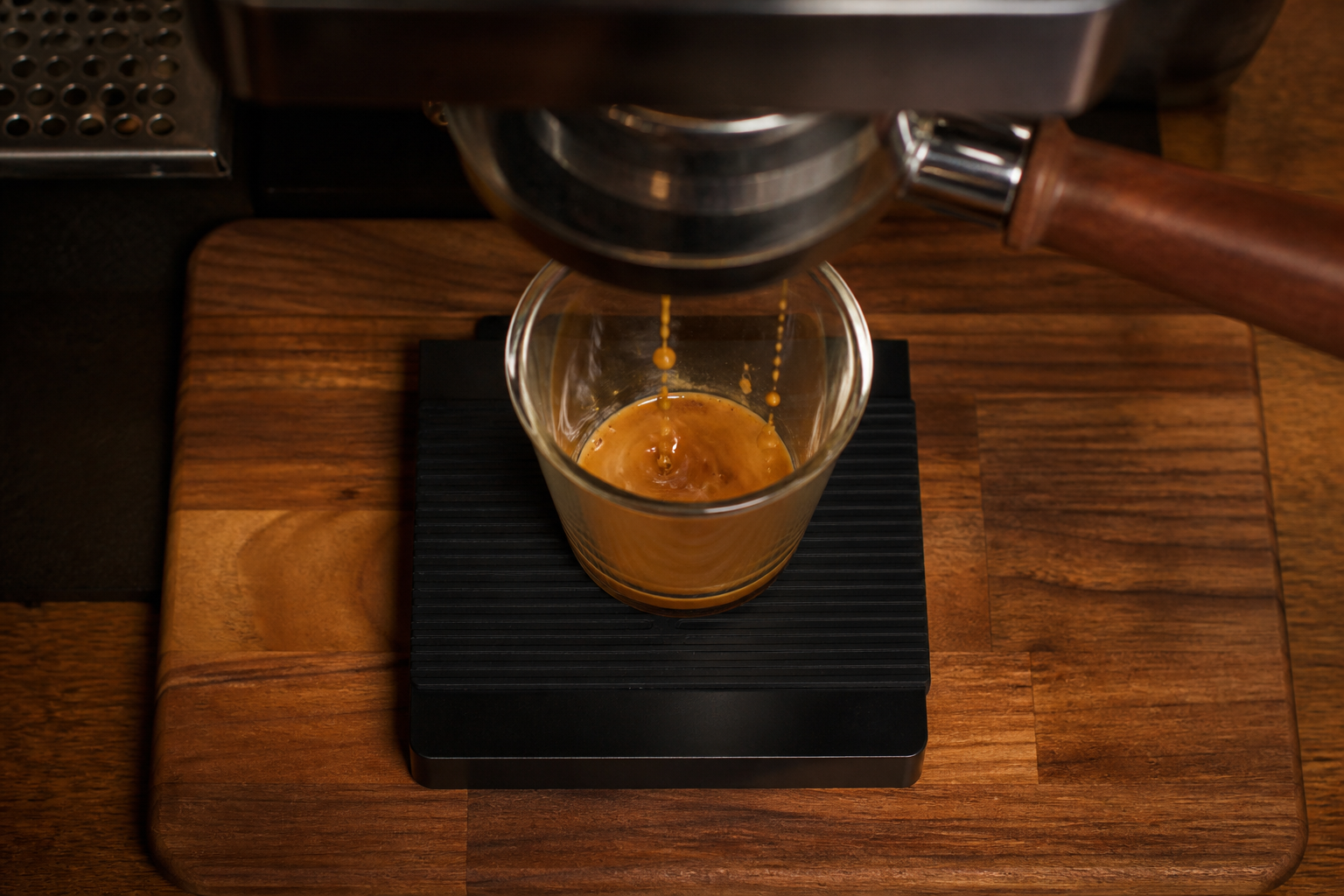
On a direct lever, low-pressure pre-infusion is achieved by gently raising the lever just enough to allow water to enter the brew chamber and contact the puck, without applying significant downward force. You might hold the lever at the top of its travel, allowing line pressure (if plumbed in) or boiler pressure to slowly saturate the puck. Alternatively, for machines like the Flair, a very light initial press allows water through the puck. The goal is to see the first drops or a slow, even bead of coffee appear on the bottom of the basket before increasing pressure. This gentle initial phase allows the CO2 trapped in the coffee to escape, preventing acidic and bitter compounds from being prematurely extracted at high pressure. It's a delicate balance of feel and observation, where patience is rewarded with a more forgiving puck and a cleaner shot.
Extended Pre-Infusion and its Impact on Puck Integrity
For lighter roasted coffees, which are often denser and less soluble, an extended pre-infusion (e.g., 10-20 seconds or even longer) can be highly beneficial. This allows more time for the water to penetrate the grounds thoroughly, promoting a more complete and even extraction later. The longer exposure to low pressure facilitates a deeper saturation, unlocking complex aromatics and sugars. However, caution is advised: excessively long pre-infusion at too high a pressure can degrade puck integrity, leading to premature channeling once full pressure is applied. The key is to find the sweet spot where the puck is fully saturated but not disturbed, offering consistent resistance for the main extraction phase. A visual check for even wetting of the puck surface (if visible) can also provide clues about saturation uniformity.
Ramp-Up Phase: Building to Peak Pressure
After pre-infusion, the ramp-up phase involves gradually increasing the pressure from the low pre-infusion level to the desired peak extraction pressure. This is where the barista begins to apply more deliberate force to the lever, translating their intention into tangible hydraulic pressure. The speed and smoothness of this transition are paramount for a successful extraction.
Gradual vs. Aggressive Pressure Ramps
The speed and steepness of the pressure ramp-up have a direct impact on the extraction. A gradual ramp-up (e.g., slowly increasing pressure over 5-10 seconds from 2 bar to 8 bar) can further enhance even extraction and mitigate channeling. It allows the coffee puck to compress slowly and uniformly, leading to a more consistent flow. This often results in a sweeter, more balanced shot with less bitterness, as the initial high-solubility compounds are extracted gently. It's particularly effective for delicate, lighter roasts where preserving nuance is key, giving the water ample time to permeate the entire coffee bed without creating preferential pathways.
An aggressive pressure ramp, on the other hand, involves quickly pushing the lever to reach peak pressure, sometimes within 1-2 seconds. While this might be suitable for some darker, less forgiving roasts or to achieve a very quick, intense extraction with a focus on body, it carries a higher risk of channeling if the puck preparation isn't flawless. The sudden surge of pressure can blast through weaker points in the puck, leading to localized over-extraction and a harsh, uneven taste. For most direct lever users focused on quality and intricate flavor profiles, a more measured and controlled ramp-up is generally preferred to maintain puck integrity and promote uniform extraction.
Peak Pressure Sustain: Optimizing Extraction Yield
Once the desired peak pressure is reached, the barista aims to sustain it for a period, allowing the primary extraction of soluble solids to occur. This phase is crucial for achieving the target extraction yield and developing the body and intensity of the espresso. The duration of this sustain phase is just as important as the pressure level itself, influencing the overall balance of the shot.
Targeting Specific Bar Pressures (e.g., 6, 7, 9 bar)
While 9 bars has been the traditional benchmark, modern profiling explores a wider range. Many baristas find that 6-7 bars can produce exceptional results, particularly with lighter, fruit-forward coffees, enhancing clarity and sweetness while reducing harshness. This lower peak pressure often requires a finer grind to maintain adequate flow resistance and extraction time. For darker, more traditional roasts, or when seeking a very viscous, full-bodied shot, 8-9 bars might be preferred. The key is to experiment and observe how different peak pressures influence the flavor profile for specific beans. A pressure gauge is invaluable here for real-time feedback, allowing you to consistently hit your target and understand its impact on the final cup.
The Role of Flow Rate in Peak Pressure Management
Pressure and flow rate are inextricably linked, forming a dynamic duo in espresso extraction. At a given pressure, the flow rate is determined by the resistance of the coffee puck (primarily influenced by grind size, dose, and tamp). During the sustain phase, monitoring the flow rate is as important as monitoring pressure. If flow is too fast at your target pressure, it indicates insufficient puck resistance (likely too coarse a grind or poor distribution), leading to under-extraction. If flow is too slow, it suggests excessive resistance (too fine a grind or too high a dose), risking over-extraction and bitterness. A skilled direct lever barista learns to adjust their lever force not just to hit a pressure target, but also to maintain a desirable flow rate, often aiming for a steady stream or specific drip rate depending on the desired shot style and bean characteristics. This continuous dance between pressure and flow is where the art of direct lever espresso truly shines.
Declining Pressure: Mitigating Over-Extraction and Bitterness
The final stage of profiling involves a controlled reduction of pressure towards the end of the shot. This is a characteristic often seen in spring lever machines, where the spring naturally loses force, and direct lever users can emulate or even refine this effect. This phase is crucial for refining the taste and ensuring a clean finish.
Controlled Pressure Decays and Their Flavor Implications
As the extraction progresses, the most desirable compounds (sugars, acids, aromatics) are extracted first. Towards the end of the shot, more bitter, astringent, and less desirable compounds begin to dominate the extraction. A controlled pressure decay, slowly reducing pressure from 9 bar down to 4-5 bar (or even lower) in the final seconds, helps to gently finish the extraction, preventing these undesirable compounds from being over-extracted. This results in a cleaner finish, enhanced sweetness, and a more balanced overall flavor profile, avoiding the harshness that can sometimes accompany a high, constant pressure until the very end. It allows the existing dissolved solids to be rinsed from the puck without forcing out less soluble, bitter components, contributing significantly to the drinkability and pleasantness of the espresso.
Feathering the Lever for a Gentle Finish
On a direct lever, achieving a controlled pressure decay is done by 'feathering' the lever – gradually easing off the downward force as the shot progresses. This requires a delicate touch and good sensory feedback. As the flow rate naturally diminishes and the puck's resistance changes due to the depletion of soluble solids, the barista can subtly reduce their pressure to maintain a steady, slow flow, or to actively reduce the pressure to achieve the desired decay. This manual feathering offers more granular control than a spring-driven decline, allowing for precise adjustments based on the visual cues of the espresso stream and the desired final taste. It's a highly intuitive process that exemplifies the connection between the barista and the machine, enabling subtle manipulations that can dramatically improve the cup quality.
Critical Variables Influencing Direct Lever Pressure Profiles
While the direct lever offers unparalleled control over pressure, its effectiveness is deeply intertwined with several other fundamental variables. These elements form the foundation upon which any successful pressure profile is built, and neglecting any one of them can undermine even the most skilled profiling efforts.
Grind Size: The Primary Resistance Factor
The grind size is arguably the most influential variable in direct lever espresso extraction. It dictates the resistance the coffee puck offers to the pressurized water, directly affecting both the pressure you can achieve with a given force and the resulting flow rate. A grind that is too coarse will offer insufficient resistance, making it difficult to build or sustain pressure, leading to a fast, watery, and under-extracted shot. Conversely, a grind that is too fine will create excessive resistance, requiring immense force to achieve minimal flow, resulting in a choked, over-extracted, and bitter espresso. The ideal grind size provides just enough resistance to allow for the desired pressure profile and flow rate with a manageable amount of force on the lever. It's the critical first adjustment in dialing in any new coffee.
Micro-Adjustments for Flow and Pressure Control
Because direct levers offer such precise control, even micro-adjustments to grind size can have a profound impact. If your desired pressure profile leads to too fast a flow, a slightly finer grind will increase puck resistance, allowing you to maintain the same pressure with less force or achieve higher pressures more easily. If the flow is too slow, a slightly coarser grind will reduce resistance. This iterative process of adjusting grind, pulling a shot, and assessing the flow and taste is central to dialing in any coffee on a direct lever. It's a continuous feedback loop where grind size sets the stage for your pressure profiling efforts; without the correct grind, even perfect lever control won't yield optimal results. The tactile feedback from the lever becomes your primary indicator of whether your grind is in the right ballpark.
Dose and Puck Preparation: Foundation for Consistent Profiling
Beyond grind size, the dose (amount of coffee) and the quality of puck preparation are critical. A consistent dose is essential for repeatable results, as it directly impacts the depth and density of the coffee puck. Varying doses will lead to different levels of resistance, making it difficult to apply a consistent pressure profile from shot to shot. Even a small deviation in dose can significantly alter the required lever force and the resulting flow dynamics. Precision weighing of your dose is a non-negotiable step for serious profiling.
Tamping Pressure and Distribution Uniformity
Even distribution of coffee grounds in the portafilter basket before tamping is paramount. Any clumps, voids, or uneven spots will create pathways of least resistance, inviting channeling regardless of your pressure profiling efforts. Tools like WDT (Weiss Distribution Technique) can significantly improve uniformity, breaking up clumps and evenly distributing grounds. Tamping pressure, while less critical than uniform distribution, should be consistent from shot to shot. A firm, level tamp ensures a compact, even puck that can withstand the hydraulic pressure without fracturing. Inconsistent tamping can lead to varying puck resistance, undermining your ability to execute a repeatable pressure profile and making it difficult to learn from your experiments. A perfectly prepared puck is the silent partner in a successful pressure profile.
Coffee Bean Roast Level and Origin Characteristics
The inherent characteristics of the coffee beans themselves heavily influence the optimal pressure profile. Different roasts and origins present unique challenges and opportunities for extraction, requiring a flexible and adaptive approach to profiling.
Adapting Profiles for Light vs. Dark Roasts
Light Roasts: These beans are denser, less soluble, and often retain more CO2. They typically benefit from longer pre-infusions (15-25 seconds at 1-2 bar) to ensure full saturation and reduce acidity. They often shine with slightly lower peak pressures (6-7 bar) to highlight their delicate floral or fruity notes, preventing over-extraction of bitter compounds. A finer grind is usually required to achieve adequate resistance at these lower pressures and longer pre-infusions, allowing for a slower, more thorough extraction. The goal is to gently coax out their complex aromatics.
Dark Roasts: Darker roasts are more porous, more soluble, and have less CO2. They can be prone to bitterness if over-extracted. A shorter pre-infusion (5-10 seconds at 2-3 bar) is often sufficient, followed by a quicker ramp to a slightly higher peak pressure (8-9 bar) if aiming for traditional body and intensity. However, a controlled declining pressure profile is particularly beneficial for dark roasts to mitigate bitterness towards the end of the shot. A coarser grind is generally needed compared to light roasts due to their increased solubility and porosity, ensuring proper flow without choking the machine. The focus here is often on managing intensity and avoiding harshness.
Water Temperature: A Silent Partner in Extraction Dynamics
While not directly part of the pressure profile, temperature management is a crucial foundational element. The temperature of the brew water significantly impacts the solubility of coffee compounds and the viscosity of the water itself. Even the most perfectly executed pressure profile can be undermined by unstable or incorrect brew water temperature.
How Temperature Affects Viscosity and Extraction Rate
Hotter water extracts compounds more rapidly and thoroughly. It also has lower viscosity, meaning it flows more easily through the coffee puck at a given pressure. If your water is too hot (e.g., above 96°C), it can accelerate extraction to the point of bitterness, harshness, and reduced clarity, making it harder to control flow, even with careful pressure profiling. Conversely, water that is too cool (e.g., below 90°C) will result in under-extraction, muted flavors, and increased viscosity, making it harder to push through the puck and achieve desirable flow rates. For direct lever machines, where precise temperature stability can be challenging, managing the grouphead temperature through flushing or active heating elements is crucial to ensure that your carefully crafted pressure profile is acting upon coffee at the optimal temperature. Optimal temperature ensures that the desired soluble compounds are extracted efficiently and balanced, without introducing off-flavors caused by thermal extremes.
Tools and Techniques for Measuring and Interpreting Profiles
While the tactile feedback of a direct lever is invaluable, objective measurement tools provide crucial data for understanding, refining, and reproducing pressure profiles. These tools transform subjective feel into quantifiable insights, allowing for a more scientific approach to espresso mastery.
Integrated Pressure Gauges: Real-time Feedback
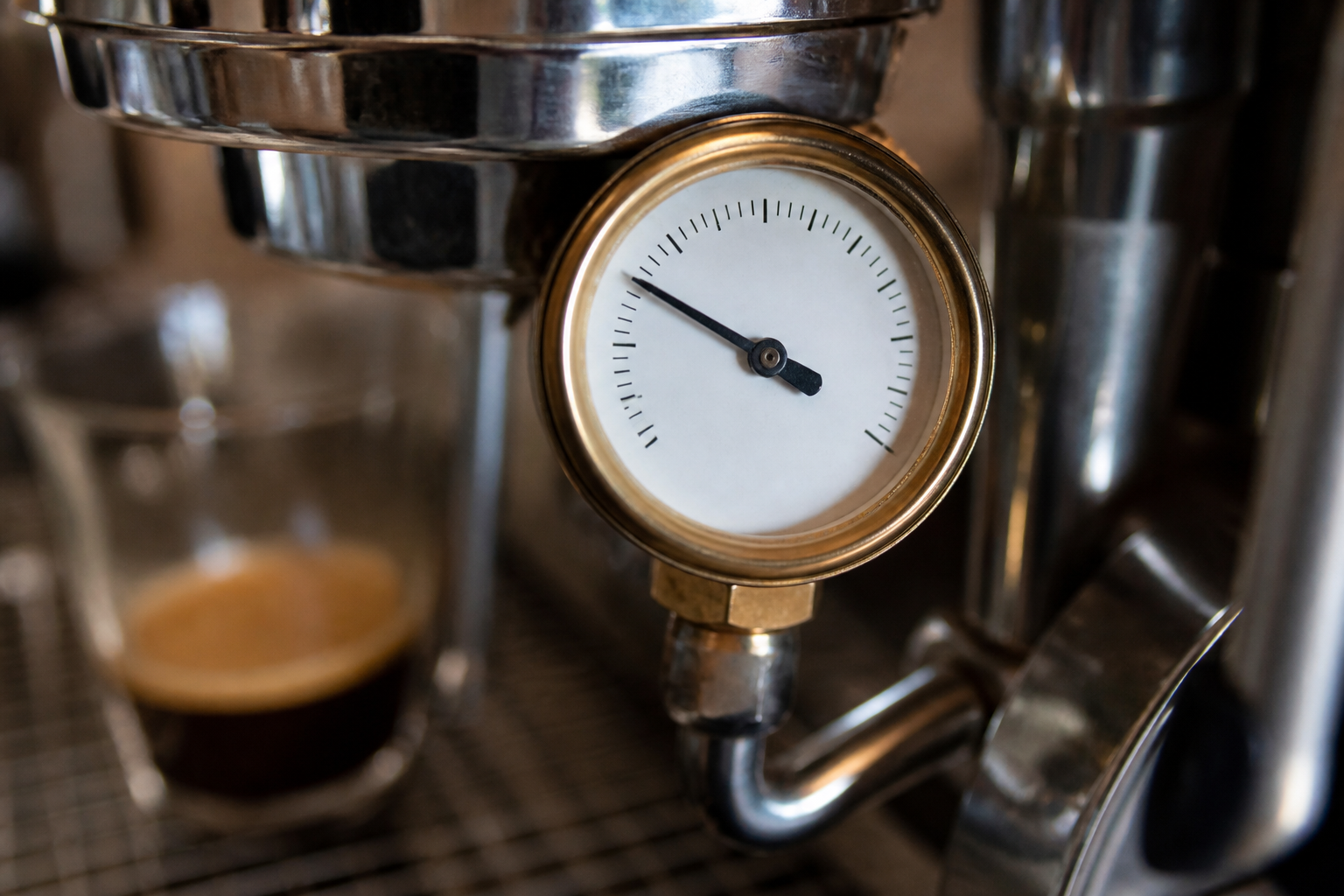
For any serious direct lever user interested in pressure profiling, an integrated pressure gauge is nearly indispensable. Typically mounted on the grouphead or portafilter, these gauges provide real-time visual feedback on the pressure being applied to the coffee puck. Without a gauge, profiling becomes a guessing game based purely on feel and visual flow, making consistency incredibly difficult. A gauge allows you to:
- Verify Pre-infusion Pressure: Ensure you're hitting the low 1-3 bar range consistently for optimal puck saturation.
- Control Ramp-Up: Guide your hand to achieve a smooth or aggressive pressure increase according to your desired profile.
- Maintain Peak Pressure: Hold a steady 6, 7, or 9 bar for the desired duration, ensuring consistent extraction.
- Execute Declining Pressure: Gradually ease off the lever while observing the pressure drop, refining your feathering technique.
The gauge acts as your primary visual aid, allowing you to correlate your lever force with actual hydraulic pressure, making the learning curve for pressure profiling significantly shorter and more precise. It's the objective data point that grounds your subjective tactile experience.
External Pressure Sensors and Data Logging
For the truly data-driven enthusiast, external pressure sensors (often digital transducers) can be integrated into the brew path. These sensors, combined with data logging software (often open-source or proprietary to specific systems), allow for the capture and visualization of the entire pressure curve over time. This offers a level of analytical detail that a simple analog gauge cannot provide. Data logging helps in:
- Analyzing Consistency: Overlaying multiple shot profiles to identify subtle deviations and areas for improvement.
- Correlating with Taste: Precisely linking specific pressure curve characteristics to sensory outcomes, building a robust understanding of cause and effect.
- Troubleshooting: Pinpointing exactly where a profile went wrong (e.g., a sudden pressure drop indicating channeling or a plateau where none was intended).
While requiring more setup and technical expertise, data logging transforms pressure profiling from an art into a more exact science, providing objective evidence for subjective taste experiences and accelerating the learning process for advanced users.
The Emergence of Flow Profiling and Flow Meters
Beyond pressure, the concept of flow profiling is gaining traction as another critical dimension of espresso extraction. Flow rate — the volume of espresso extracted over time (e.g., grams/second or ml/second) — is another critical metric that directly impacts extraction kinetics and overall flavor. Some advanced direct lever setups are now incorporating flow meters to provide this crucial data point.
Correlating Flow Rate with Pressure Dynamics
While pressure is the input (what you apply), flow rate is the output (how the coffee responds). By combining pressure and flow data, a barista gains a more complete picture of the extraction. For example, you might target a specific pressure, but if the flow rate is too fast, you know the puck resistance is too low (likely too coarse a grind or poor distribution). Conversely, if flow is too slow, resistance is too high. Flow meters allow you to:
- Optimize Pre-infusion: Ensure a consistent, gentle flow rate during saturation to maximize evenness.
- Identify Choking/Channeling: Sudden drops or spikes in flow can indicate issues with puck integrity or grind inconsistency.
- Target Brew Ratios by Flow: Achieve specific extraction targets by observing the flow curve, not just total output volume, allowing for more dynamic and precise brew ratios.
The interplay between pressure and flow is dynamic and complex. A direct lever barista learns to 'feel' this interplay, but adding a flow meter provides quantifiable data to validate and refine those intuitions, pushing the boundaries of manual espresso control and offering unprecedented insight into the extraction process.
Crafting Signature Espresso Profiles with a Direct Lever
The beauty and versatility of direct lever machines lie in their ability to emulate or even create unique extraction profiles that are difficult or impossible to achieve on other types of espresso machines. This section delves into a few notable profiles and how a direct lever provides the ideal platform for their execution.
The 'Slayer' Profile: Extended Low-Pressure Pre-Infusion
Named after the popular commercial espresso machine, the 'Slayer' profile emphasizes a long, low-pressure pre-infusion phase, often lasting 20-30 seconds or more, at pressures typically below 3 bars. This is followed by a ramp-up to a moderate peak pressure (6-8 bars) and then a controlled decline. On a direct lever, this is achieved by gently raising the lever to allow water to saturate the puck at minimal pressure, holding it there until the first drips appear, and then slowly increasing pressure. This profile is renowned for enhancing sweetness, reducing bitterness, and bringing out delicate floral and fruity notes, especially in light and medium roasted coffees. The extended low-pressure phase allows for deeper, more even saturation of the coffee bed, mitigating channeling and promoting a very clean, nuanced cup. It's a testament to how patient pre-infusion can unlock hidden complexities in high-quality beans.
The 'Turbo Shot' Profile: High Flow, Lower Pressure
A more recent innovation, the 'Turbo Shot' challenges traditional espresso parameters. It typically involves a slightly coarser grind, a lower peak pressure (often 6 bars or less), and a significantly faster extraction time (e.g., 15-20 seconds for a 1:2.5 or 1:3 brew ratio). The key is allowing a higher flow rate throughout the extraction. On a direct lever, this means using a slightly coarser grind than usual, applying lighter pressure, and letting the shot flow more freely. This profile is particularly suited for modern, lighter roasted coffees, often yielding a surprisingly sweet, clean, and less intense shot with excellent clarity, minimal bitterness, and a lighter body. It's a testament to how varying flow and pressure can unlock different aspects of a coffee's flavor potential, offering a refreshing alternative to the traditional intense espresso.
Experimenting with Custom Profiles for Different Beans
The true mastery of a direct lever comes from developing your own custom profiles. Start with a known baseline (e.g., a short pre-infusion, ramp to 8 bar, gentle decline) and then systematically vary one parameter at a time. For a new single-origin coffee, consider its roast level, processing method (washed vs. natural), and typical flavor notes. A natural processed Ethiopian might benefit from a long, slow pre-infusion and a moderate peak pressure to highlight its fruitiness, while a washed Colombian might respond well to a quicker ramp and a slightly higher peak pressure for clarity and body. Keep detailed notes of your grind settings, dose, temperature, pressure profile (including pre-infusion time and pressure, peak pressure, and decline strategy), flow rate, and most importantly, the sensory outcome. This systematic experimentation is how you build a repertoire of profiles tailored to your favorite beans and preferences, transforming your direct lever into a true flavor laboratory.
Troubleshooting Common Pressure Profiling Challenges
Even with the best intentions and the most capable direct lever machine, challenges are inevitable. Recognizing and addressing these issues is part of the learning process, transforming frustrating failures into valuable learning opportunities.
Inconsistent Pressure Application
One of the most common hurdles for new direct lever users is maintaining consistent pressure throughout the shot. The human hand is not a perfectly calibrated pump, and you might find your pressure fluctuating during the sustain phase or failing to execute a smooth ramp or decline. This inconsistency often leads to unpredictable shots with varying flavor profiles, making it difficult to pinpoint what went wrong.
- Solution: Practice, practice, practice. Use your pressure gauge religiously as your primary feedback tool. Focus on slow, deliberate movements, engaging your core muscles, not just your arm, for more stable force application. Try pulling 'dummy' shots with just water or a spent puck to get a feel for the lever's resistance at different pressures without wasting coffee. Pay attention to how the lever 'feels' at 6 bar versus 9 bar, and try to replicate that sensation. Consistent posture and grip can also significantly improve repeatability.
Channeling and Uneven Extraction Despite Profiling Efforts
Channeling occurs when water finds preferential pathways through the coffee puck, leading to localized over-extraction in some areas and significant under-extraction elsewhere. This results in a sour, bitter, or generally unbalanced shot, often with visual signs like spurting from the portafilter or a very uneven flow. It's a common failure mode that can negate even the most thoughtful pressure profile.
- Solution: Channeling is almost always a puck preparation issue. Revisit your fundamentals: ensure an even grind distribution (WDT is highly recommended to break up clumps), level tamping, and consistent dose. If you're using a very aggressive pressure ramp, try a slower, gentler one, or extend your pre-infusion to allow the puck to fully saturate and settle before applying high pressure. Check your basket for cleanliness and ensure it's not overfilled, which can lead to head space issues and puck disturbance upon locking in the portafilter. A bottomless portafilter is an invaluable diagnostic tool here, as it visually exposes channeling.
Achieving Repeatable Results: Practice and Documentation
The highly manual nature of direct lever profiling means repeatability is a significant challenge. It's easy to pull one amazing shot and then struggle to recreate it, leading to frustration. The variability inherent in manual control requires a systematic approach to achieve consistent excellence.
- Solution: Develop a rigorous documentation habit. Record every variable: bean type, roast date, grind setting (with specific grinder clicks/numbers), dose (in grams), yield (in grams), pre-infusion time/pressure, peak pressure, total shot time, and most importantly, detailed sensory notes. Use a consistent workflow for puck prep. Over time, this data, combined with consistent practice, will allow you to build a reliable mental and physical library of how different parameters interact and how to reproduce successful profiles. Don't be afraid to pull multiple shots in a session, making small, incremental adjustments to truly understand the impact of each change, comparing the results side-by-side.
The Art and Science of Direct Lever Pressure Profiling Mastery
Ready to Master Your Espresso?
Explore our top picks for direct lever espresso machines with advanced pressure profiling capabilities and elevate your home barista experience.
As an Amazon Associate, we earn from qualifying purchases.
Mastering pressure profiling on a direct lever espresso machine is a journey that blends scientific understanding with intuitive artistry. It's a continuous learning process that rewards patience, meticulous attention to detail, and a deep appreciation for the craft of espresso making. The allure of these machines lies precisely in this challenge and the profound satisfaction of crafting a truly exceptional shot with your own hands, a direct reflection of your skill and dedication.
Integrating Sensory Evaluation with Technical Data
Ultimately, the numbers on your pressure gauge or flow meter are only proxies for the true goal: a delicious cup of espresso. The most skilled direct lever baristas don't just chase numbers; they use technical data to inform their sensory evaluations. They correlate a specific pressure curve with heightened sweetness, reduced bitterness, or a particular mouthfeel. This integration of objective data with subjective taste is where true mastery lies. If a shot tastes bland, despite hitting your target pressure, you might need to adjust your grind finer to increase extraction, or extend pre-infusion. If it's too bitter, perhaps a gentler decline in pressure is needed. The feedback loop between taste, observation, and technical adjustment is central to continuous improvement with manual pressure profiling machines, allowing you to continually refine your technique based on tangible results.
The Future of Manual Espresso Control
As espresso technology continues to advance, the direct lever machine remains a steadfast icon of manual control. While modern pump machines offer increasingly sophisticated electronic profiling capabilities, the direct lever provides a raw, unfiltered connection to the extraction process. It teaches fundamental principles of fluid dynamics, puck mechanics, and sensory evaluation in a way no automated machine can. The future of manual espresso control will likely see further refinements in integrated feedback systems (e.g., more precise digital gauges, integrated flow meters, and perhaps even haptic feedback) that enhance the barista's ability to interpret and execute profiles, without sacrificing the essential hands-on experience. For those who seek to truly understand and shape their espresso, the direct lever will always offer the most rewarding path to mastery, pushing the boundaries of what's possible in a cup.
Frequently Asked Questions About Direct Lever Pressure Profiling
There is no single 'optimal' pressure profile, as it heavily depends on the coffee bean (roast level, origin), desired flavor profile, and personal preference. However, a common and effective starting point involves a low-pressure pre-infusion (1-3 bar for 5-15 seconds), a ramp-up to a moderate peak pressure (6-9 bar), sustained for 15-20 seconds, followed by a controlled decline in pressure towards the end of the shot (down to 3-5 bar). Experimentation and sensory evaluation are key to finding the best profile for your specific coffee.
Grind size is the primary determinant of puck resistance. A finer grind increases resistance, allowing you to achieve higher pressures with less lever force and slowing down flow. A coarser grind decreases resistance, requiring more lever force to hit peak pressures and resulting in faster flow. Correct grind size is crucial for enabling the desired pressure profile and flow rate; it's the foundation upon which all profiling efforts are built.
While it's possible to pull decent shots without a pressure gauge, achieving truly consistent and repeatable pressure profiles is exceptionally difficult. A gauge provides essential real-time feedback, allowing you to precisely monitor and adjust your lever force to hit specific pressure targets for pre-infusion, peak pressure, and decline. Without it, you rely solely on tactile feel and visual flow, which are subjective and harder to reproduce accurately.
Light roasts generally benefit from longer, lower-pressure pre-infusions (15-25+ seconds at 1-2 bar) and moderate peak pressures (6-7 bar) to enhance sweetness and clarity, often requiring a finer grind. Dark roasts, being more soluble, typically need shorter pre-infusions (5-10 seconds at 2-3 bar) and can handle higher peak pressures (8-9 bar), but benefit greatly from a controlled pressure decline to mitigate bitterness. A coarser grind is usually appropriate for darker roasts.
Pre-infusion is critical for both, but arguably even more so on a direct lever due to the direct and often rapid application of pressure. Without a controlled pre-infusion, the sudden force from a direct lever can easily disturb the puck, leading to severe channeling. Direct levers offer unparalleled control over pre-infusion duration and pressure, allowing for very gentle and extended saturation phases that are harder to achieve on many pump machines, making it a powerful tool for enhancing extraction quality.