Top Manual Espresso Makers for French Press Lovers: An Extensive Review
Discover how manual espresso machines offer the same tactile, hands-on satisfaction as your favorite French press while unlocking pro-level extraction.
As an Amazon Associate, we earn from qualifying purchases at no extra cost to you.
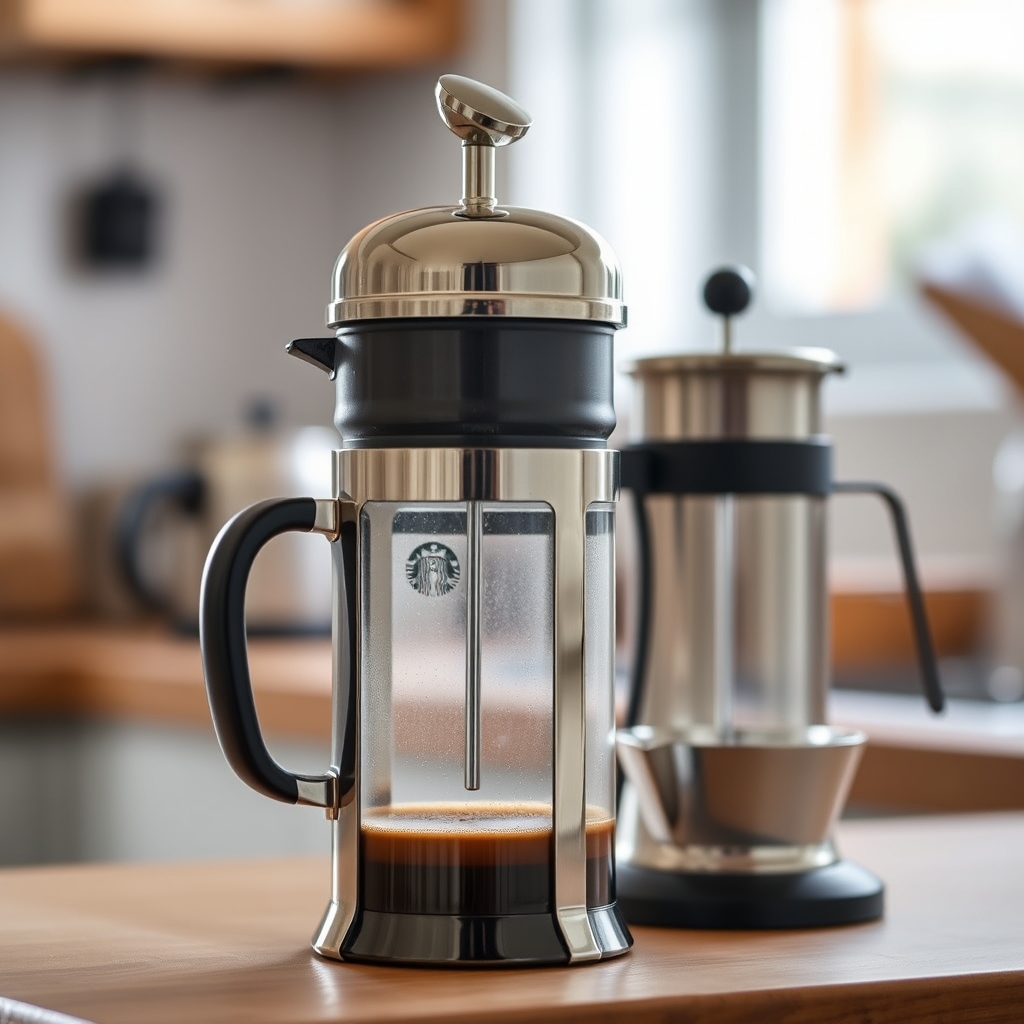
Why French Press Enthusiasts Are Moving to Manual Espresso
For many coffee enthusiasts, the French press is the gateway to specialty coffee. It is a ritual defined by simplicity: coarse grinds, hot water, a four-minute wait, and the satisfying, heavy plunge. However, as the palate matures, many users find themselves yearning for more complexity. The French press, while excellent for body, often masks the delicate acidity and aromatic nuances of single-origin beans. This is where manual espresso makers enter the picture. They are not merely machines; they are tactile instruments that bridge the gap between simple immersion and high-pressure extraction. See also our guide on Best Budget Espresso Machines 2026.
The transition from French press to manual espresso is essentially a shift from 'passive' to 'active' brewing. In a French press, the coffee is left to its own devices during the immersion phase. In manual espresso, you are the pump, the boiler, and the barista. This shift is deeply rewarding for those who enjoy the physical ritual of coffee making. When you pull a lever on a manual machine, you feel the resistance of the coffee puck—a sensory feedback loop that is remarkably similar to the plunge of a French press, yet significantly more revealing of the coffee's true character. See also our guide on Best Budget Espresso Machines 2026.
Furthermore, the shift addresses the desire for 'caffeine density.' While French press coffee is delicious, it is often diluted compared to the concentrated, syrupy nature of a true espresso shot. Manual machines provide the necessary 6 to 9 bars of pressure to emulsify coffee oils, producing that golden-brown crema that is physically impossible to achieve with a standard French press. By mastering a manual machine, you reclaim control over variables like pre-infusion time, pressure ramping, and total extraction time, allowing you to tailor every cup to your exact specifications.
The Core Differences: Extraction Science and Workflow
To master manual espresso, one must first understand the fundamental differences between French press and espresso. The French press utilizes an immersion method, where coffee and water dwell together for several minutes, leading to a largely uniform extraction profile. Conversely, espresso is a pressurized extraction method that forces water through a tightly compacted puck of finely ground coffee in under 30 seconds.
Understanding Pressure vs. Immersion
Pressure is the variable that changes everything. In a French press, the only pressure applied is the mechanical force of the mesh filter moving through the liquid. This pressure is negligible and does not contribute to flavor extraction. In a manual espresso machine, you are generating 6 to 9 bars of pressure. This force is necessary to overcome the resistance of the fine grind and emulsify the coffee oils. For the French press lover, this means learning to control variables like pre-infusion time and lever speed—tasks that reward the user with a much more dynamic, layered cup of coffee.
The anatomy of a manual machine is also distinct. Most feature a group head, a portafilter, and a pressure-generating mechanism (lever or pump). Understanding how these components interact is vital. The 'puck' must be perfectly level and dense; otherwise, the water will find the path of least resistance, a phenomenon known as 'channeling,' which leads to sour, under-extracted coffee. Unlike the forgiving nature of a French press, manual espresso requires precision in every step of the process.
What to Look for in a Manual Espresso Maker
The Importance of Grind Consistency
If there is one lesson every French press convert must learn, it is the grind consistency requirements. You cannot use the coarse, chunky grounds meant for your French press in an espresso basket. Espresso demands a fine, uniform grind that can withstand high pressure without channeling. If your grinder isn't up to the task, even the best manual espresso machine will fail to produce a balanced shot. A burr grinder with micro-adjustments is non-negotiable here.
Portability vs. Bench Stability
Do you want a machine that sits on your kitchen counter, or one you can throw in a travel bag? Manual espresso makers vary wildly in design. Bench-top lever machines offer superior thermal stability and leverage, making them easier to use consistently. Portable units, while incredibly convenient, often require more physical strength and may have shorter thermal retention cycles, making them more suited for the occasional espresso drinker or the frequent traveler.
Top Manual Espresso Makers for the French Press Convert
Product A: The Wacaco Picopresso
The Wacaco Picopresso is the gold standard for portable espresso. It uses a professional-grade basket that actually pulls true espresso shots. For a French press user who values the ability to brew anywhere, this is the ultimate upgrade.
Why it suits French Press lovers: Its compact, hand-pump design feels remarkably similar to the tactile sensation of plunging a French press, but the result is a concentrated, syrupy shot of espresso. It is the most accessible entry point for someone used to manual brewing rituals.

Best for Travel
Wacaco Picopresso
Check Price on Amazon
- True espresso extraction
- Compact and lightweight
- Professional 52mm basket
Product B: The Flair 58
The Flair 58 is the pinnacle of manual espresso. It features a heated brew head and a long lever that provides incredible control over your pressure profile. It is the closest you will get to a commercial machine in a manual, non-electric package.
Why it suits French Press lovers: If you enjoy the ritual of the French press, the Flair 58 elevates that ritual to an art form. You control every ounce of pressure, allowing for deep exploration of coffee flavor profiles.
Pros
- Unmatched pressure control
- Heated brew group for thermal stability
- Standard 58mm portafilter
Cons
- Requires a separate kettle
- Large footprint for a manual device
Product C: The Flair Neo Flex
The Flair Neo Flex is designed for the beginner who wants to test the waters without a significant financial commitment. It is lightweight, durable, and provides enough feedback for you to learn the mechanics of espresso extraction.
Why it suits French Press lovers: It maintains a very simple workflow that doesn't feel overwhelming. If you like the simplicity of your French press, the Neo Flex offers a similar 'no-nonsense' approach to brewing.
Bridging the Gap: Mastering the Manual Extraction
Transitioning to manual espresso is a journey of discovery. Start by focusing on your puck preparation. Use a distribution tool to ensure the coffee is level. When you pull the lever, aim for a steady, consistent pressure rather than a rapid, jerky motion. Your goal is to find the 'sweet spot' where the flow rate remains constant throughout the 25-30 second extraction. It takes practice, but the rewards are far superior to standard immersion brewing.
Troubleshooting is part of the process. If your shot is too sour, you are likely under-extracting; try a finer grind or a longer pre-infusion. If it is too bitter, you are over-extracting; try a coarser grind or less pressure. Channeling is another common failure mode—if you see the coffee coming out unevenly, re-evaluate your puck distribution technique.
Maintenance Realities: Manual Espresso vs. French Press
One of the most significant maintenance realities is that manual espresso machines require more frequent cleaning than a French press. Because you are dealing with high-pressure seals and fine coffee oils, you must rinse the group head and portafilter after every use to prevent buildup that can alter the flavor of future shots. Unlike a French press, which can be rinsed and left to dry, a manual espresso machine is a precision tool that demands regular attention.
Frequently Asked Questions
No. French press grinders produce coarse, uneven particles that will clog an espresso basket or result in a sour, watery shot. You need an espresso-capable burr grinder to achieve the fine, consistent grind required for pressure extraction.
Yes, provided your grind and technique are correct. Manual machines use force to emulsify coffee oils just like electric pumps, allowing for a rich, thick crema.
It is more involved. While a French press requires a simple rinse of the mesh filter, a manual espresso machine requires cleaning the basket, portafilter, and the group head seal to maintain pressure integrity.
Yes, many enthusiasts use portable makers daily. They take up very little counter space and offer a deeply satisfying, hands-on experience, though they may lack the thermal stability of larger lever machines.
Related guides on this site
These pages sit in the same topical map — go deeper without leaving the cluster:
- Best Budget Espresso Machines 2026
- Best Budget Espresso Machines 2026: Hands-On Reviews & Buyer's Guide
- Best Coffee Grinders for French Press vs Espresso: A Comprehensive Buying Guide
- Espresso Machine Maintenance vs French Press Cleaning: A Comprehensive Guide
- French Press Techniques for Espresso-Like Strength: A Scientific Guide
- French Press vs Espresso: Caffeine Content & Extraction Science
- French Press vs Espresso: Which Brewing Method Suits You?
Related guides
Espresso Machines
Best Budget Espresso Machines 2026: Hands-On Reviews & Technical Guide
We tested budget espresso machines under $500 for thermal stability, pressure regulation, and shot quality. Discover top entry-level models that deliver true espresso.
Read guide →Coffee Equipment
Best Coffee Grinders for French Press vs Espresso: A Comprehensive Buying Guide
Stop guessing your grind size. Learn how to navigate the technical divide between French Press and espresso with our data-driven grinder buying guide.
Read guide →Coffee Education
Espresso Machine Maintenance vs French Press Cleaning Guide
Comprehensive engineering and hygiene guide comparing espresso machine mechanical maintenance against French press deep cleaning routines.
Read guide →Coffee Science & Equipment
Espresso Machine Pressure Profiles: 9 Bars vs. Variable Pressure
An in-depth fluid dynamics and extraction study comparing fixed 9-bar espresso extraction with variable pressure profiling for optimizing yield, body, and flavor.
Read guide →